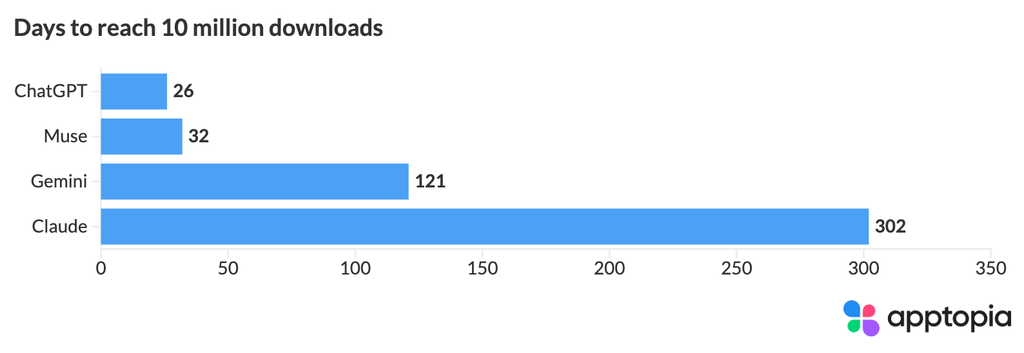
As of this post, Apptopia estimates Meta’s Muse has been installed 14.1 million times. Daily active users continue to accelerate as downloads remain high but have flattened. Muse hit 10 million downloads after being live for 32 days on the market, faster than Google Gemini and Claude but just six days slower than ChatGPT. Granted, ChatGPT was live in more markets. Muse is still only live in the US and Canada.
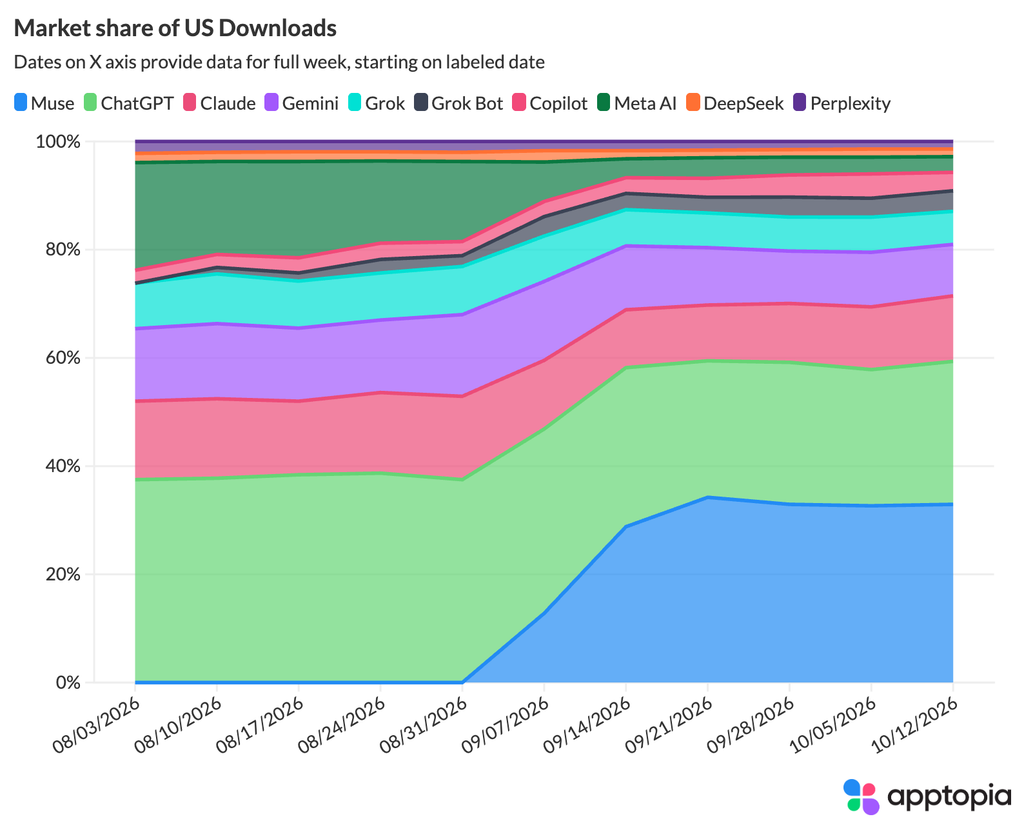
As you might imagine, Muse currently has the largest share of downloads for the GenAI app market in the US at 32.9%. ChatGPT had a 37.5% share right before Muse launched, but now sits at 26.4%. Outside of Meta AI, Google’s Gemini was most impacted by the launch of Muse, losing 37% of its market share. Grok Bot’s download market share has been slowly rising, now sitting at 3.8%, above those of DeepSeek and Perplexity.
Naturally, a lot of people downloading Muse were already users of ChatGPT, Claude, etc. We isolated users of ChatGPT who installed Muse to see how their average time spent changed once they opened Muse for the first time. What we found, in both the case of ChatGPT and Claude, was that time spent actually grew for the incumbent app. Still, time spent on Muse was more than that of the incumbent.
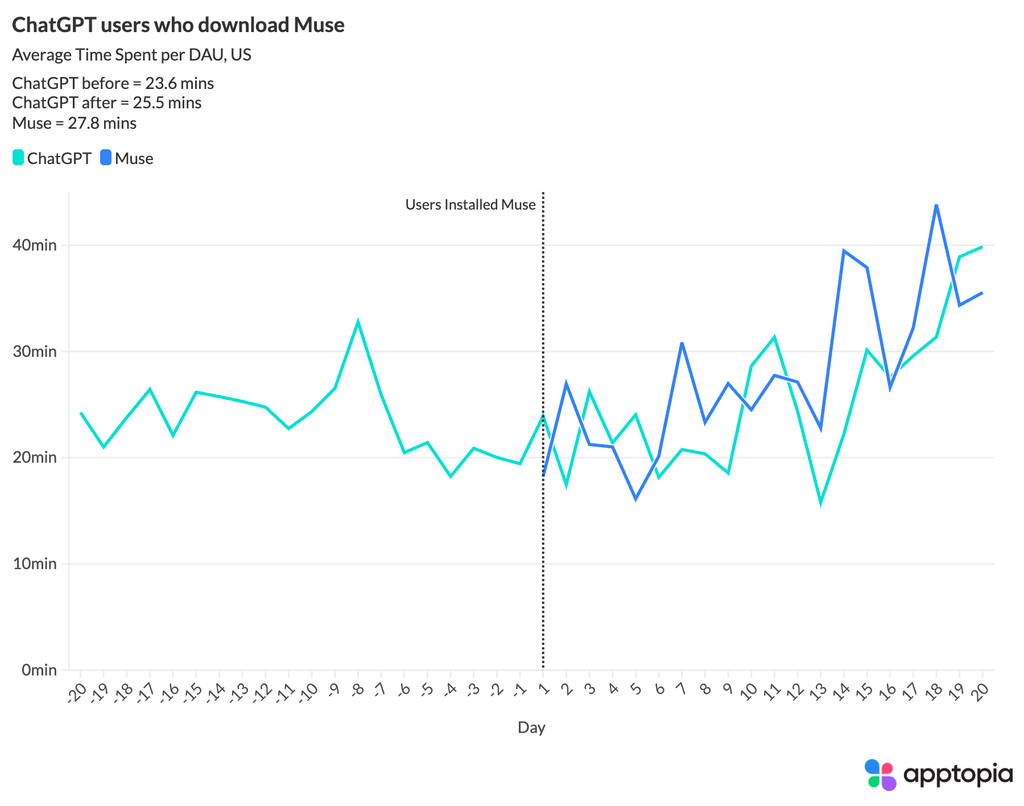
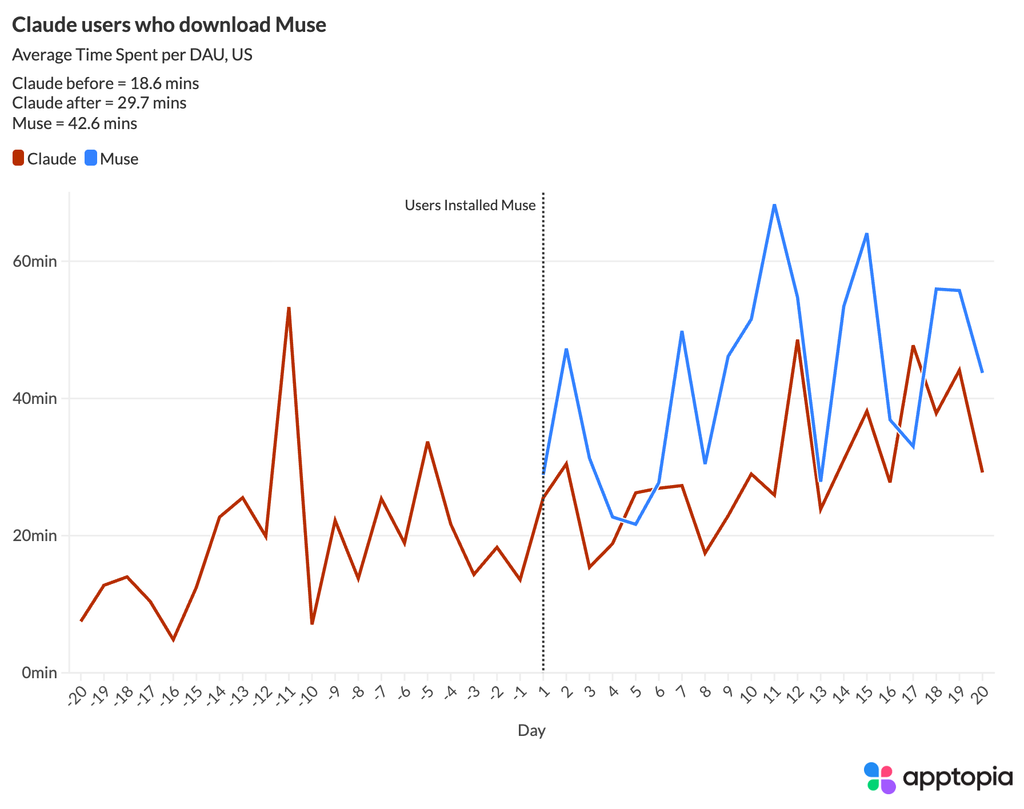
We’ve seen similar patterns with sports betting apps. When someone installs another app, they generally raise their overall time spent within these apps. It ends up being a force multiplier, not a situation where someone is removing their old tool for the new one.
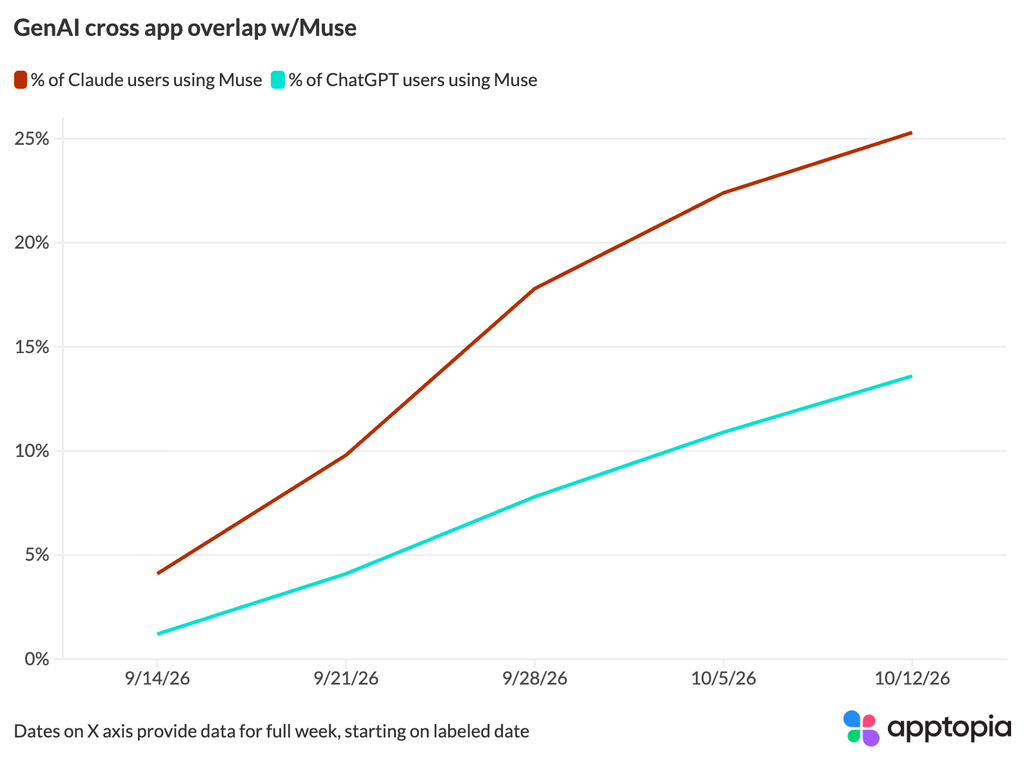
If there is eventually more of a clear threat to the LLM chatbots, Claude is showing the worse of it, with a quarter of its users now also using Muse. 11.2% of Google Gemini’s users were using Muse as of last week.
So far Muse has shown to have superior retention numbers compared with ChatGPT and Claude. For Muse, we looked at all users who installed the app in the month of September and measured their retention one week after, two weeks after, three weeks after, and four weeks after. For the incumbents, we did the same thing but averaged the data from people who installed the apps any time from January through September. In all four weeks, Muse had a higher retention rate than both by an average of ~5 percentage points. October data is incomplete, but early indicators look like there will be a drop in retention rate for these users.
We previously posted data comparing Muse’s average time spent per DAU and average sessions per DAU against the incumbents. We also profiled the users and found Muse users tend to be older. You can find those insights here.
Questions remain. What apps are people using before and after their Muse sessions, and how does this compare to the LLM chatbot apps? As it pertains to ecommerce, what shopping apps are people jumping into after Muse? After ChatGPT? What is the conversion rate for Muse’s subscriptions? These are things Apptopia is answering for investors every day. Reach out if you’d like to learn more.