The biggest IPO in history gave Robinhood [NASDAQ: HOOD] a boost in engagement and news users. On June 12, the day SpaceX began trading on the Nasdaq under the ticker SPCX, US downloads of the Robinhood app hit 44,259. That is 65% above the app’s highest single day over the prior six weeks and roughly double its April-through-May daily average. Total sessions cleared 27 million, a third higher than any day in that baseline. For an app whose daily volume usually drifts inside a tight band, this was a 12-standard-deviation event on installs.
We sliced Robinhood’s June 12 activity by age cohort, and the surge in engagement was overwhelmingly a young-user phenomenon. The 18-to-25 group ran 7.6 sessions per active device that day, up 109% from its six-week norm. No other cohort moved like that. The 26-to-35 band rose 22%. Traders 36-to-45 barely budged, and the 46-plus group was essentially flat.
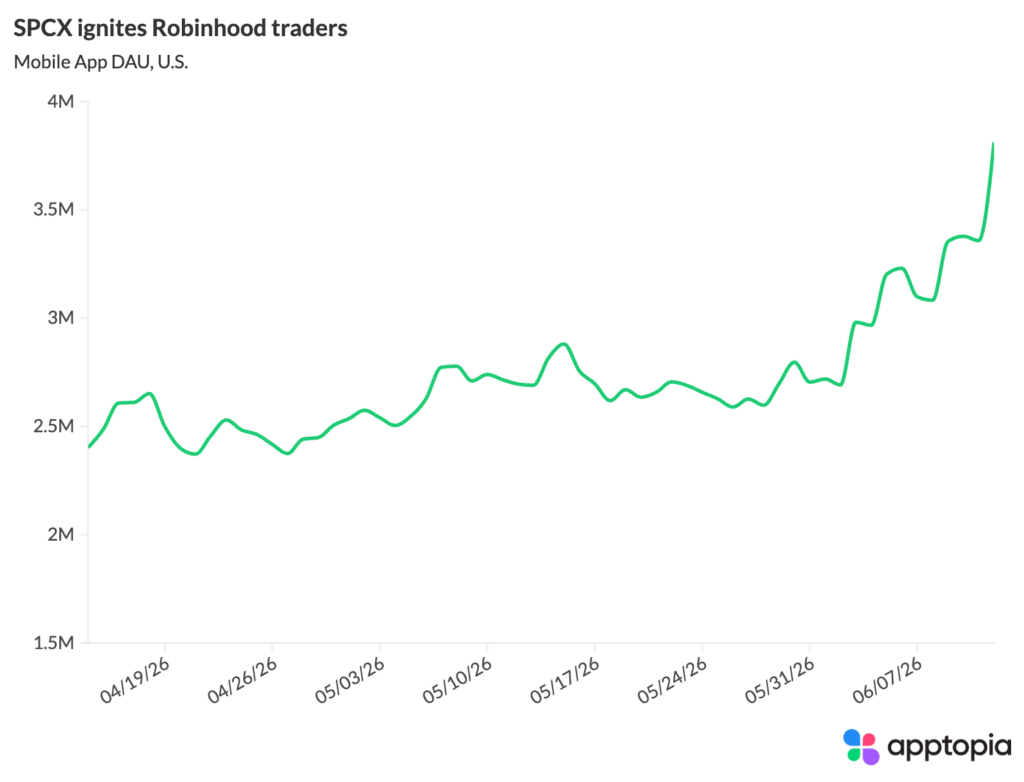
While the youngest users opened the app far more than usual, they did not take over the platform. That same 18-to-25 cohort’s share of weekly active users on June 12 actually sat 24% below its normal level. The base of people logging in stayed dominated by older traders, where the 46+ segment remained the largest active group and the 36-to-45 cohort stayed the heaviest traders by raw intensity, as they have all Spring.
The cleaner way to say it: SpaceX did not flood Robinhood with a wave of new young investors. It took the young minority already on the app and got them to trade like the IPO was, in one trader’s words, the Super Bowl.
A debut that closed up 19.34% on record retail demand and briefly knocked Robinhood offline for thousands of users proves the app can convert a cultural moment into volume on command. Whether a one-day adrenaline spike among its lightest-using cohort becomes durable engagement is the question future weeks will answer.